Gait Biometrics
Human identification using unique gait patterns, silhouette analysis, and movement intelligence.
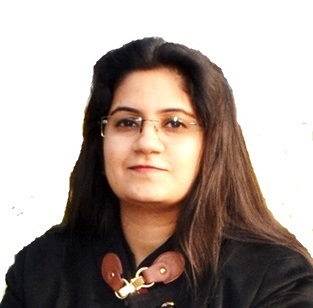
Analytics & AI Engineer · Pearce Services · Gurugram, India
Ph.D. · Computer Science & Engineering · Manipal University Jaipur
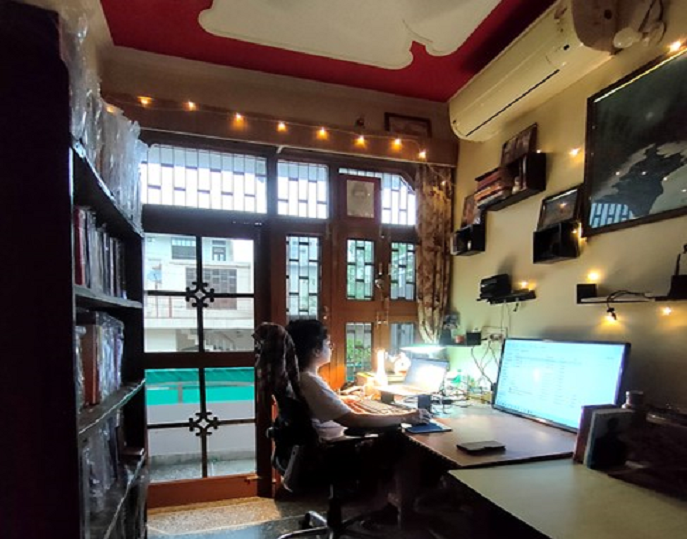
AI Research Scientist, Analytics & AI Engineer, educator and technology innovator with more than a decade of experience across AI, deep learning, computer vision, biometrics, generative AI, NLP and intelligent systems.
"Always walk through life as if you've something new to learn and you will."
Dr. Anubha Parashar is an accomplished Analytics & AI Engineer, AI researcher, and educator with over a decade of experience in deep learning, computer vision, generative AI, biometrics, NLP, and intelligent systems. She currently works at Pearce Services, Gurugram, where she develops production-grade AI solutions for real-world applications, including solar panel defect detection, edge AI systems, forecasting models, scheduling optimization, OCR pipelines, and GIS-based analytics.
Prior to her current role, she served as a Research Scientist – Artificial Intelligence & Metaverse at Invincible Ocean, Gurugram (Apr 2024 – Dec 2024), where she delivered a suite of production AI systems: a Vehicle RC Data Chatbot powered by a fine-tuned LLM that reduced manual search time by 70%, a Virtual Try-On (VITON) platform using deep learning to overlay clothing on user photos at 95% satisfaction, and a Text Recognition & OCR pipeline built with Tesseract, PaddleOCR, and Paddle NLP achieving 98% accuracy with a Dockerized, Gemini-assisted backend.
Before her industry journey, she spent nearly eight years as a Senior Assistant Professor in Computer Science & Engineering at Manipal University Jaipur (Jul 2016 – Apr 2024), teaching and designing curriculum across AI, Deep Learning, Computer Vision, NLP, IoT, Image Processing, and Humanoid Robotics. She supervised 15+ M.Tech theses, collaborated with industry partners, and was recognised with the Excellent Young Researcher Award 2022 by Manipal University Jaipur.
She holds a Ph.D. in Computer Science and Engineering with a specialization in Artificial Intelligence from Manipal University Jaipur. Her doctoral research focused on robust gait recognition using deep learning to handle real-world covariates such as clothing variation, occlusion, viewpoint changes, and appearance differences. She has also served as a Visiting Scholar at the University of Zagreb, Croatia, and has extensive academic experience as a faculty member and research mentor.
Her research profile includes over 50 peer-reviewed publications, 6 granted or published patents, more than 10 keynote talks, and reviewer roles for leading international journals and conferences. Her research interests include gait recognition, biometrics, large language models, generative AI, computer vision, NLP, robotics, IoT, bipedal locomotion, and brain–computer interaction.
At the core of her work, Dr. Parashar is a builder of intelligent systems — combining research depth, engineering execution, and academic leadership to create AI solutions that are practical, scalable, and impactful.
AI/ML & Deep Learning
Computer Vision & Biometrics
GenAI, LLMs & Agentic AI
Cloud, MLOps & Deployment
Edge AI & IoT
Tools & Frameworks
Languages
Database
Web Servers
Cloud
Hardware Platforms
Operating Systems
Core Computer Science
GenAI & Agentic AI
Optimization & MLOps
Software Tools
Research Interests
Human identification using unique gait patterns, silhouette analysis, and movement intelligence.
Deep learning, machine learning, computer vision, NLP, and intelligent system design.
Privacy-aware biometrics, federated learning, and secure AI for real-world applications.
AI for healthcare, gait analysis for medical care, Parkinson disease studies, and mobility analytics.
Building real-world AI solutions, industrial analytics, dashboards, OCR, and intelligent automation.
A timeline of medical gait research, academic work, applied AI, industry systems, and the Gait Intelligence vision.
Early research foundation in gait analysis for medical care, with work related to movement assessment and Parkinson disease-oriented gait understanding.
Built a strong research foundation in artificial intelligence, deep learning, computer vision, gait biometrics, silhouette analysis, and privacy-preserving human identification.
Expanded academic and research exposure through verified international conferences, collaborations, and academic visits, including Croatia and Dubai.
Taught and mentored students in AI, machine learning, deep learning, computer vision, NLP, IoT, biometrics, image processing, and research methodology.
A focused initiative for gait intelligence, healthcare AI, surveillance, gait biometrics, mobility analytics, and AI-based human movement understanding.
Worked on applied AI systems, LLM workflows, cloud-native AI architecture, OCR, virtual try-on, intelligent automation, and AI product development.
Built real-world AI/ML systems for computer vision, predictive maintenance, OCR, optimization, industrial analytics, dashboards, and intelligent decision-support systems.
GLOBAL FOOTPRINTS
Places connected to conferences, workshops, research visits, academic events, talks, awards, collaborations, treks, sports, outreach activities, and personal memories.

Rarely do people come with as much drive as Anubha. When she was a PhD student, during that time, I was impressed by her research skills. She showcased talent, too—effortlessly juggling a wide array of technical skills. I'm confident that Anubha will have a bright future in her chosen career path of research and that she'll be an asset to any employer.

Working with Anubha Parashar is a rare opportunity to come across, a self-driven researcher with team spirit. She did a marvellous job during her PhD for five years at Manipal University. She is innovative, organized as well as helpful and is always open to ideas and suggestions. It was a pleasure to mentor her for all these years.

Anubha Parashar worked as a PhD scholar under my supervision for five years. As a co-guide, I was consistently impressed by her research skills, dedication, and commitment. She is an innovator who consistently invests time in improving her knowledge and learning. She is focused, reliable, goal-oriented, and always does her best. She is kind, outstanding, and knows how to bring the best out of herself. Fit for industry and academia.
Anubha Parashar worked as a research scholar at MUJ campus for five years. As a guide, I was impressed by her work ethic and research skills. She is a hard-working young lady with a great set of technical skills and commitment to her duty. She was always ready to go the extra mile to provide high-quality research outcomes. She will be an asset to any organization.

One of the most dynamic students of my career, Anubha has the skill to convert ideas into practical work. I was happy to guide her and saw strong ability in bipedal walking systems and machine learning. I wish her the best. She is also strong in MATLAB and is suitable for industry and academia.
Let’s build intelligent solutions, advance research, and create real-world impact together.
End-to-end AI/ML solutions from problem framing and data strategy to model development, deployment, and system scalability.
Explore ServicesCustom computer vision systems including detection, tracking, OCR, medical imaging, and real-time intelligence solutions.
View ProjectsOpen to impactful collaborations in AI, deep learning, gait biometrics, privacy-preserving AI, and human-centric systems.
CollaborateEngaging talks on AI, ML, DL, CV, NLP, IoT, biometrics, and responsible AI for academic, industry, and global events.
Invite MeGuidance on research framing, experiments, publications, paper writing, projects, and academic growth.
MentorshipPartnering for gait intelligence, healthcare AI, surveillance, mobility analytics, and biometric innovation.
Explore PartnershipAvailable for inspiring sessions, expert panels, and strategic conversations.
Available ForKeynotes, tech talks, academic sessions, and guest lectures.
Hands-on workshops on AI, ML, DL, CV, NLP, IoT, and more.
Expert panels on AI ethics, innovation, research, and impact.
Joint research, grants, papers, and innovation partnerships.
Customized AI/ML training for teams and organizations.
Let’s connect to create knowledge, build solutions, and make a meaningful difference.
Get In Touch